Pri . 01, 2024 09:34 Back to list
Coal takes millions of years to form
Types of coal
Coal is classified into four main types, or ranks: anthracite, bituminous, subbituminous, and lignite. The ranking depends on the types and amounts of carbon the coal contains and on the amount of heat energy the coal can produce. The rank of a coal deposit is determined by the amount of pressure and heat that acted on the plants over time.

Anthracite contains 86%–97% carbon and generally has the highest heating value of all ranks of coal. Anthracite accounted for less than 1% of the coal mined in the United States in 2020. All of the anthracite mines in the United States are in northeastern Pennsylvania. Anthracite is mainly used by the metals industry.
Bituminous coal contains 45%–86% carbon. Bituminous coal in the United States is between 100 million and 300 million years old. Bituminous coal is the most abundant rank of coal found in the United States, and it accounted for about 44% of total U.S. coal production in 2020. Bituminous coal is used to generate electricity and is an important fuel and raw material for making iron and steel. Bituminous coal was produced in at least 18 states in 2020, but five states accounted for about 74% of total bituminous production: West Virginia (28%), Pennsylvania (14%), Illinois (13%), Kentucky (10%), and Indiana (8%).
Subbituminous coal typically contains 35%–45% carbon, and it has a lower heating value than bituminous coal. Most subbituminous coal in the United States is at least 100 million years old. About 46% of total U.S. coal production in 2020 was subbituminous and about 88% was produced in Wyoming and 8% in Montana. The remainder was produced in Alaska, Colorado, and New Mexico.
Lignite contains 25%–35% carbon and has the lowest energy content of all coal ranks. Lignite coal deposits tend to be relatively young and were not subjected to extreme heat or pressure. Lignite is crumbly and has high moisture content, which contributes to its low heating value. Lignite accounted for 9% of total U.S. coal production in 2020. About 54% was mined in North Dakota and about 39% was mined in Texas. The other 7% was produced in Louisiana, Mississippi, and Montana. Lignite is mostly used to generate electricity. A facility in North Dakota also converts lignite to synthetic natural gas and pipes it to natural gas consumers in the eastern United States.
Mining and transporting coal
Mining coal
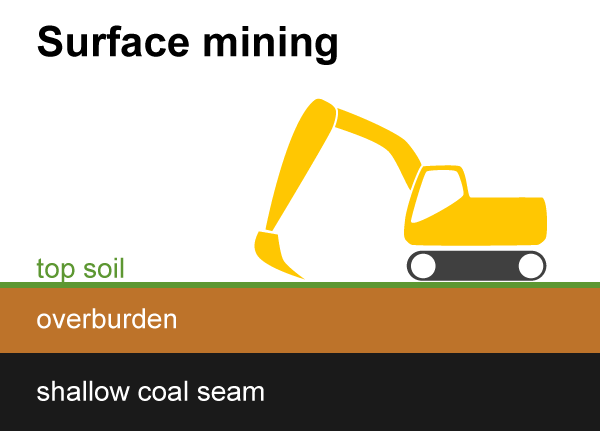
Source: Adapted from National Energy Education Development Project (public domain)
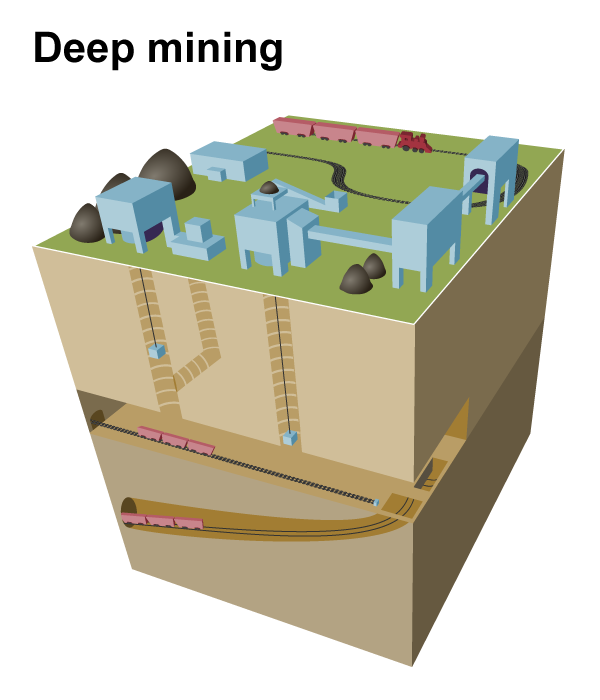
Source: Adapted from National Energy Education Development Project (public domain)
Coal miners use large machines to remove coal from the earth. Many U.S. coal deposits, called coal beds or seams, are near the earth's surface, while others are deep underground. Modern mining methods allow coal miners to easily reach most of the nation's coal reserves and to produce about three times more coal in one hour than in 1978.
Coal miners use two primary methods to remove coal
Surface mining is often used when coal is less than 200 feet underground. In surface mining, large machines remove the topsoil and layers of rock known as overburden to expose coal seams. Mountaintop removal is a form of surface mining where the tops of mountains are dynamited and removed to access coal seams. Once the coal is removed, the disturbed area may be covered with topsoil for planting grass and trees. About two-thirds of U.S. coal production is from surface mines because surface mining is less expensive than underground mining.
Underground mining, sometimes called deep mining, is necessary when the coal is several hundred feet below the surface. Some underground mines are thousands of feet deep with tunnels that may extend out from the vertical mine shafts for miles. Miners ride elevators down deep mine shafts and travel on small trains in long tunnels to get to the coal. The miners use large machines to dig out the coal.
Processing coal
After removing the coal from the ground, the miners may send it to a preparation plant near the mining site. The plant cleans and processes coal to remove rocks, dirt, ash, sulfur, and other unwanted materials. This process increases the heating value of the coal.
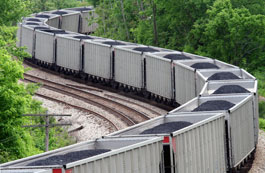
Source: Stock photography (copyrighted)
Transporting coal
Coal can be transported from mines and processing plants to consumers in several different ways:
- Conveyors, trams, and trucks move coal around mines, short distances from mines to consumers close to the mines, or to other modes of long-distance transportation.
- Trains transport nearly 70% of coal deliveries in the United States for at least part of the way from mines to consumers.
- Barges transport coal on rivers and lakes.
- Ships transport coal on the Great Lakes and the oceans to consumers in the United States and other countries.
- Slurry pipelines move mixtures of crushed coal and water. This method is not currently in use in the United States.
Transporting coal can be more expensive than the cost of mining coal. Some coal consumers, such as coal-fired electric power plants, are near coal mines to lower transportation costs.
 Albanian
  English
  Afrikaans
  Amharic
  Arabic
  Armenian
  Azerbaijani
  Basque
  Belarusian
  Bengali